The independent appliance repair shop across the West Coast
When the Oven Lies About Its Temperature
If your oven bakes hot, cold, or unevenly, it's usually the calibration, the door seal, or the temperature sensor, and we work on all three across LA. Cookies burn on the bottom in nine minutes, or the roast sits pale after an hour, and the dial still says 350. Temperature drift is one of the most common calls we take, from Valley bungalows to beach-adjacent condos. Here's what's usually going on, plus what you can safely check before calling us.
Call (888) 352-5066- You reach a person, not a menu
- Open every day
- The quote comes first, in writing
Taking calls until 5:00 PM PT
By our service team · vetted by the techs who do this daily
What "running hot" or "running cold" actually means
An oven doesn't hold one steady temperature. It swings. The sensor reads the air, the control turns the heat on, the air overshoots, then it coasts back down. A healthy oven cycles in a tight band around your setting. When something drifts, that band moves or widens. Hot means food scorches outside before the middle cooks. Cold means long bakes, pale crusts, undercooked centers. Uneven means one side of the sheet pan browns and the other doesn't. Each pattern points at a different part, so pay attention to which one you have. It saves guessing later.
Cause one: calibration and habits, the cheap stuff
Start with the free possibilities. Most ovens have a calibration offset in the control settings, and it can get nudged by a cleaning cycle or a power blip. Your manual shows how to check it. Then look at how you're loading the oven. Foil on the bottom rack blocks airflow and reflects heat upward, a crowded oven bakes slow, and dark pans run hotter than shiny ones. Opening the door to peek dumps real heat fast, and in an older LA apartment with a small cavity, that hurts more. One more thing: give it a full preheat, not the beep. Many ovens beep early.
Cause two: the door and the seal
Heat leaks. The gasket around the door opening is a rope of woven fiberglass, and over the years it gets crushed, torn, or greasy. Run your hand around the closed door edge and feel for warm air escaping. Look at the gasket for gaps, flat spots, or missing sections. Check that the door closes square and doesn't sag, and that the glass isn't loose in the frame. Hinges wear out, especially on ovens that get heavy use. A door sitting open even a quarter inch will make the oven chase temperature all day and still bake cold. We find this a lot in older rental units.
Cause three: the sensor and the control board
Inside the cavity, usually at the upper back, there's a thin metal probe. That's the temperature sensor. Its resistance changes with heat, and the control board reads it. If the probe drifts out of spec, the oven confidently holds the wrong temperature. If it's touching the cavity wall or got bent during a cleaning, readings skew. The control board itself can also misread, or a relay sticks and leaves an element on too long. Heating elements fail partially too. A bake element can quit while broil still works, which explains browning on top with a raw bottom.
What you can safely check, and what we do
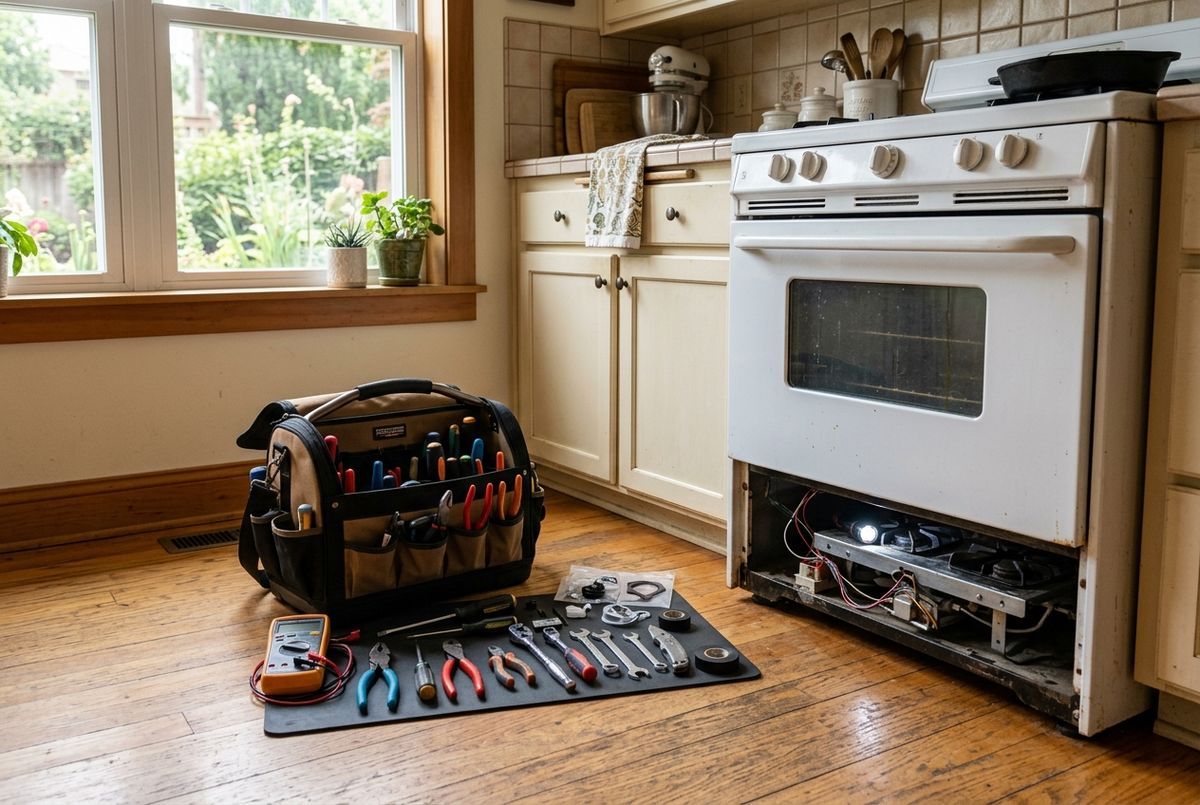
Safe for you: put an oven thermometer on the center rack, preheat to 350, and take readings every ten minutes for half an hour. Write them down. Inspect the gasket. Confirm the door shuts flush. Look up your model's calibration menu. Stop there. Don't remove back panels, don't touch gas connections, don't poke at wiring. When we get there, we test sensor resistance cold and hot against the manufacturer's chart, check element continuity, log actual cycling behavior against the setpoint, and inspect hinges and igniter timing on gas units. Have your thermometer notes ready. Reach us.
When the Oven Lies About Its Temperature — what people ask
Can I just set my oven 25 degrees higher and live with it?
Short term, sure. But drift often grows, and the offset isn't the same at every temperature. An oven 25 degrees cold at 350 may be 60 off at 450. Better to find the actual cause.
My self-clean cycle ran and now temps are off. Related?
Often yes. Self-clean pushes the cavity past 800 degrees. That heat stresses the sensor, the gasket, and thermal fuses. Trouble showing up right after a clean cycle is a pattern we see all the time.
Does a gas oven drift differently than electric?
Somewhat. Gas ovens depend on an igniter that has to glow hot enough to open the valve. A weak igniter means long preheats and cold baking. Electric drift usually traces back to sensors, elements, or the board.
How it works
- Step 1
Tell us the symptom
Call us or type it into the form. Leaking, buzzing, not draining, a blinking code. We ask a few questions and write down your brand and model so the van gets loaded right.
- Step 2
We pick a window
We build arrival windows around real traffic instead of wishful thinking. Tell us about gate codes, HOA elevator hours, or a tight parking situation, and we plan the route around it.
- Step 3
Diagnose, then repair
The tech opens the machine, tests the part that failed, and tells you what he found in plain words. Nothing gets ordered or replaced until you approve it. Common parts ride along in the van.
- A real person answers
- Open 7 days
- Written quote before work starts
Why homeowners call us
- Stacked units and tight closetsApartment and condo laundry usually sits in a closet with two inches of clearance. We pull, service, and reset stacked washer-dryer sets without wrecking the drywall or the drain pan underneath.
- Coastal air, valley heatNear the water, salt air rusts hinges and control boards. Inland, heat cooks compressors and dryer vents. So we check for the wear your zip code causes, not only the part you called about.
- HOA-aware visitsBuildings have rules: loading dock windows, service elevators, insurance paperwork, quiet hours. We work inside those limits so your manager stays calm and the repair still happens on schedule.
- Four states, one callCalifornia, Nevada, Arizona, and Oregon. Same intake, same questions, same plain talk about the repair. One number to remember when the second home or the rental unit acts up.
- All major brands, gas & electricEvery major appliance brand, gas and electric, handled by an independent shop.
- Straight answersIf replacing beats repairing, you hear it from us first.
About this guide
Safe checks done and it still misbehaves? That's a real fault
Bring your notes from the checks to the call and booking takes no time.
- A real person answers
- Open 7 days
- Written quotes
- All major brands
- Gas & electric
Rather not call? Get a free quote →